
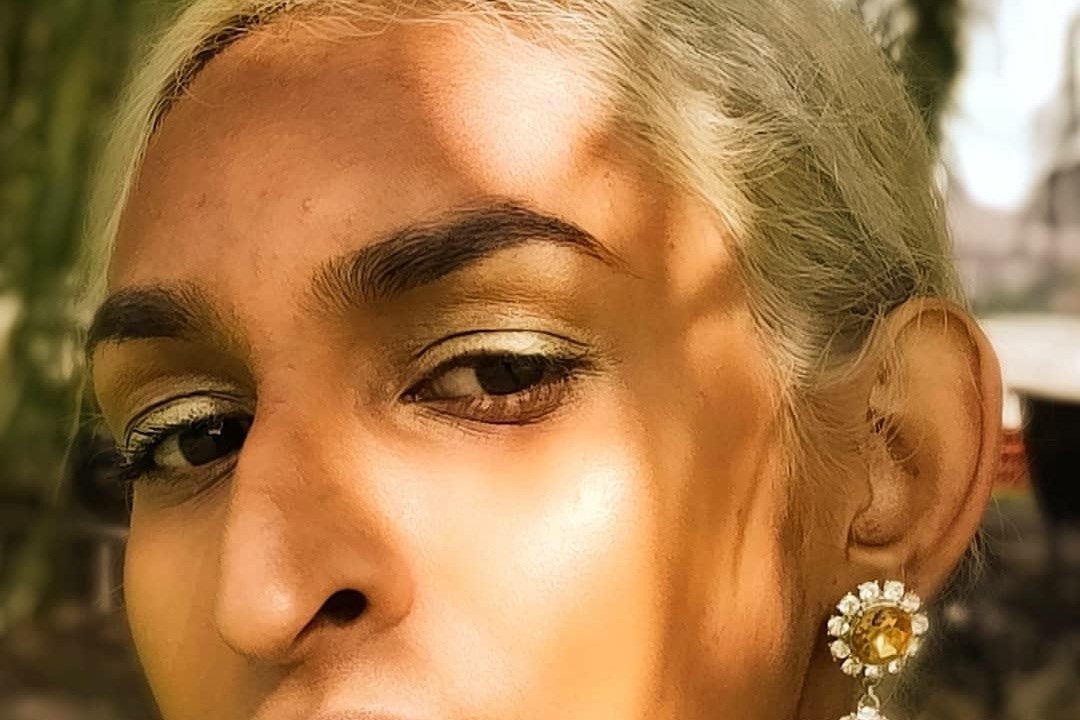
A two-minute mirror rule was effectively enforced for many of my childhood — as often as possible, I allotted myself a gracious two minutes for mirror usage to minimise seeing myself. Mirrors jogged my memory that frizz control was beyond me, my dark complexion scolded me to remain out of the sun, and my hooked brown nose dominated my entire face.
By ignoring brown racialised noses, the mainstream beauty industry reduces South Asians as simply “other,” revoking the complexity to a cultured identity. Lots of us develop self-hatred for our roots because of the socialised disgust for anything that isn’t white. We predominately see white women, “respectable” light-skinned black women, and everybody else that may be a brand of white-passing within the media. Notable Bollywood actress Aishwarya Rai, ranked as one of the beautiful women on earth, in accordance with Vogue, has brown hair, blue-green eyes, and a button-like nose. Bollywood is prone to showcasing a white-refined variety of beauty, and more so implicitly propelling the mass skin bleaching and body surveilling culture.
Many South Asian people have long noses that depress on the tip. Like everyone on my father’s side, my harshly sloped nose blatantly screams my Bengali roots. These noses have inexplicable ancestral ties as I share the identical side profile because the distinguished Bengali author Sarat Chandra, most of the freedom fighters from the Bangladesh Liberation War, and my deceased grandmother. This nose has a story about my bloodline, my history, and even where I envision going. The best way it intensely protrudes, the slant of the outline, the best way the tip is acutely triangular has meaning beyond aesthetics.
“I adapted this face from the keen awareness that the tip of my nose significantly languishes more from smiling”
Yet, if we flick through my childhood photos, my small lethargic face stares back, smileless. I adapted this face from the keen awareness that the tip of my nose significantly languishes more from smiling – I didn’t have the desire to make myself any uglier than I already appeared.
During college, I started learning about my heritage. I grasped that an inverse relationship between colonisation and self-love for people of color prevailed. I hyperanalysed my community’s self-hatred: my grandmother’s interchangeable usage of the Bengali word shada (literally translates to white) with beautiful; my circle of brown girlfriends’ (including myself) attempts to straighten hair since middle school; and my brother’s refusenik attitude towards wearing South Asian garments in fear of being “caught” by his American friends.
Once I started acknowledging this, I started remedying my spirit. I surrounded myself with radical women of color and really began witnessing them, falling in love with them, and establishing a way of gravity from their very being. The softness from the kinship people of color exclusively shared provided me with a way of belonging and identity. The alchemy of thick curly hair, the keenness from the sun’s kiss on dark skin tones, and the sound of jingle bells from the intricately embroidered South Asian dresses finally struck me with admiration.
“Within the privacy of my very own company in the lavatory of the workshop, I pressed my finger to the tip of my nose and pushed it upwards”
Media’s gradual approval towards so a lot of my brown features including, my brown skin, thick eyebrows, and long neck also heightened my self-acceptance. Although the web could also be notorious for cultivating insecurities amongst women, it also rides the wave of the body positive movement that recognises women’s empowerment with hashtags akin to #BlackGirlMagic, #PraisetheAsian, and #effyourbeautystandards.
Well equipped with intersectional feminist thought, I attended workshops and events where I advocated for girls of color’s right to self-love. Self-love is important for girls of color since it resists the notion that labels white beauty standards because the only ideal. By unapologetically wearing a bindi, a cherished South Asian adornment, I’m acknowledging there may be value in my culture.
Still, within the privacy of my very own company in the lavatory of the workshop, I pressed my finger to the tip of my nose and pushed it upwards. My nose suddenly appeared petite and pointed upward, like Kylie Jenner, Ariana Grande, and Gigi Hadid. I shamefully felt more beautiful for 10 seconds after which I dropped my hands from my face, destroying my fantasy. I sighed and exited.
My openness towards my complicated feelings about my appearance is a results of my honest processing: bell hooks writes that “Selecting to be honest is step one within the means of love. There isn’t any practitioner of affection who deceives. Once the selection has been made to be honest, then the following step on love’s path is communication.” Having self-awareness is step one towards growth. Looking inwards and identifying aspects that I need to shift compels me to live a fuller life— a life closer to total self-love.
“With a purpose to feel inspired, we’d like to see skin tones that reflect us, hair that’s us, and enormous noses which might be remorseless and exquisite”
I admit that I feel guilty for resenting my nose because there may be pressure to practice the utmost self-love within the feminist community. On the opposite side, there may be pressure to be in close proximity to whiteness / “beauty.” It looks as if there is no such thing as a winning for girls of color – just a variety of nuance. With a purpose to unpack the cultural contradiction and volatile atmosphere between generations of South Asians, we’d like to simply accept nuance.
I reject practising a mechanical version of self-love for the gaze of others and I actually desist losing the legacy of my nose to a cosmetic nose job. I decide to love and understand love at my very own pace. My loving is evolving and it organically manifests while I concurrently unlearn that my beauty is either a trend, fetish, or just undesirable.
Together with South Asians, racialised noses exist inside other ethnicities as well. Many individuals from the Middle East and/or Jewish diaspora are stereotyped for his or her noses and even depicted as evil or “oriental” to advertise anti-semitic or anti-Arab propaganda. Wide flared noses which might be mostly related to black folks are also rarer in mainstream media. My childhood initially was deprived of the representation of girls of color until I used to be introduced to Destiny’s Child. I used to be entranced by their talent and sweetness, for the primary time witnessing various shades of black. Representation matters since it is the path to normalising and empowering marginalised identities. What we devour online shapes the best way we view ourselves; in an effort to feel inspired, we’d like to see skin tones that reflect us, hair that’s us, and enormous noses which might be remorseless and exquisite. On a macro level, mass media and social media must feature and uplift all variety of noses to normalise the various reality of noses.
I subscribe to committing to the self-love process by myself terms. Although the guilt related to disliking my nose prevails some days, I’m habitually taking selfies, affirming myself in front of a mirror, and selectively engrossing myself in women of color’s art. Channelling some big nose energy, I archive some eccentric noses on Pinterest and Instagram and fiercely smile unafraid for my foreseeably beloved nose.





No Comments
Sorry, the comment form is closed at this time.